

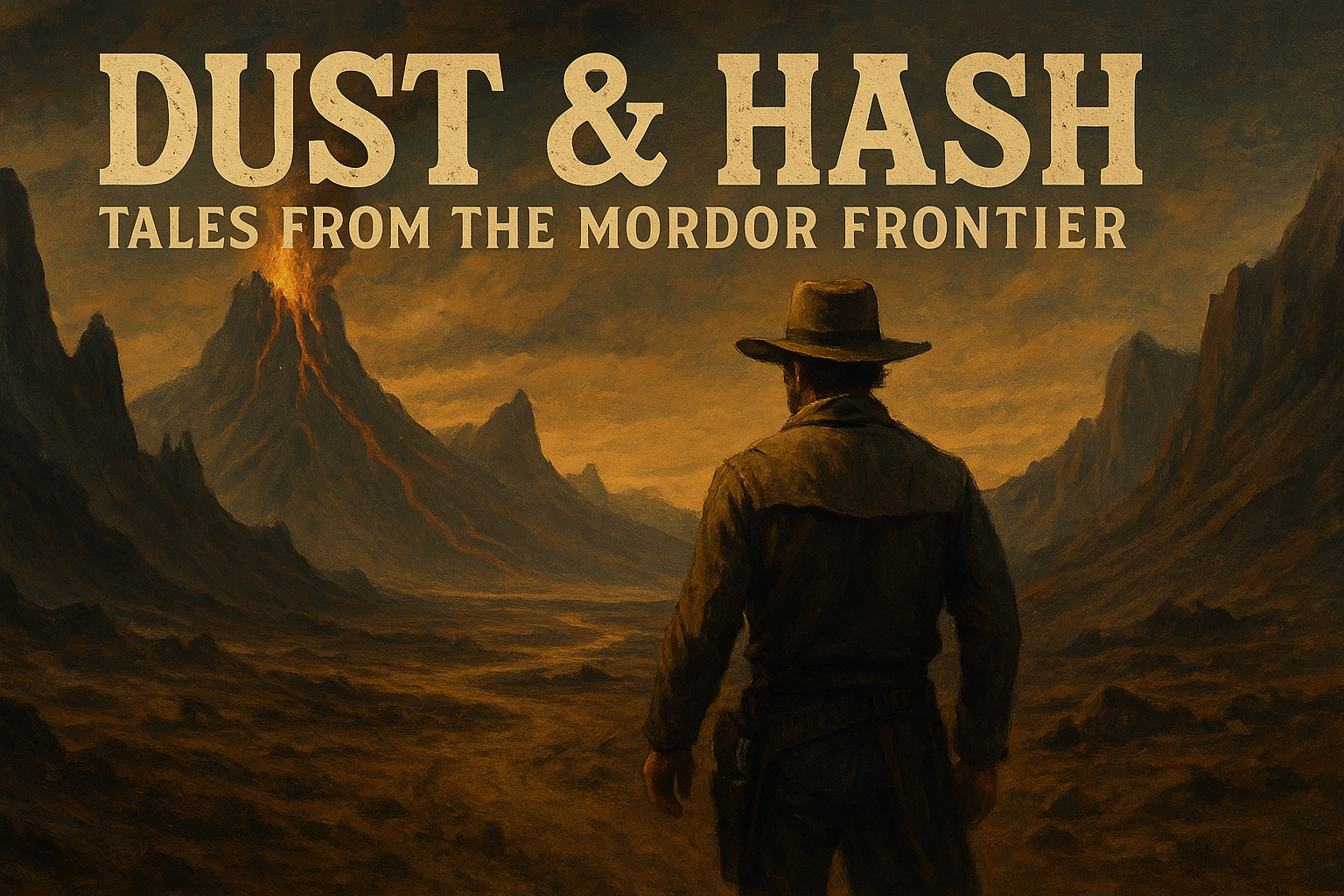
Dust & Hash: The Long Watch of Gorgoroth

Season 2: Episode 2

It has been some time since the last entry. That, too, is intentional. Gorgoroth is not a place for spectacle; it is a place for endurance. Progress here is measured not in announcements, but in stability, repeatability, and the quiet absence of failure.

What began as a proving ground for Fukuii has become something sturdier — almost permanent. We have built the tools needed to live here. The most important of them is fukuii-cli, a simple but disciplined instrument that can start and stop nodes, initiate syncs, and smoke-check environments before trouble has a chance to take root. These are not glamorous victories, but they are the kind that matter. Infrastructure earns trust by being boring.It has become clear to me that Gorgoroth may outlive Fukuii itself. What started as a test configuration is turning into a pattern — a way of standing up networks quickly, validating assumptions, and hardening systems before they are exposed to the wider world. Trials, it seems, have a habit of becoming institutions.Our efforts have not been limited to the client alone. The frontier has widened.Beyond Fukuii, the work now stretches into prediction-market-powered DAOs, mining pool infrastructure, TokenMint 2.0, and other experiments still finding their shape. Each one feeds the others. Each one strengthens the army.My time in Mordor served its purpose. I learned what I needed to learn there — about systems, about patience, about what survives prolonged exposure to reality. I no longer feel the need to rush. The army grows whether I watch it or not. The tools mature. The noise fades.I can see it now, rising in the distance through the haze — Barad-dûr.That will be the final test. Not of whether Fukuii can run, but of whether everything we have built can stand together under real pressure, real users, and real consequences.I am patient.The time is near.

The Gorgoroth Trials continue.

What has emerged most clearly over this period is the distinction between the tools we are forging. Fukuii is a node client — sovereign, focused, and increasingly disciplined. Gorgoroth is something else entirely: a battle-net test harness designed to validate Ethereum Classic node behavior under controlled, repeatable conditions.

They serve different purposes. They answer different questions.

Fukuii asks: Can this client run the network correctly?

Gorgoroth asks: Can clients survive reality together?

To support this work, we have built the operational tooling needed to manage the terrain. fukuii-cli now allows us to start and stop nodes, manage sync behavior, and perform smoke checks on environments before deeper testing begins. These tools are not flashy, but they are decisive. They reduce uncertainty. They shorten feedback loops. They make the work repeatable.

Gorgoroth is not an endpoint, nor is it a byproduct. It is a compatibility proving ground — one that may be reused, adapted, and extended beyond Fukuii as other clients, configurations, and assumptions are tested against Ethereum Classic’s rules. Its value lies in discipline, not permanence.

Beyond Fukuii and Gorgoroth, the frontier has widened. Work continues across prediction-market-powered DAOs, mining pool infrastructure, TokenMint 2.0, and related systems that benefit from the same rigor learned here. Each effort strengthens the others. Each sharpens the collective understanding of what it takes to operate in the open.

My time in Mordor served its purpose. It taught me how systems behave when no one is watching — and how patience outperforms urgency. The army grows steadily now, not through force, but through alignment.

In the distance, Barad-dûr rises — not as myth, but as a final integration test. That is where everything converges: client behavior, operational readiness, compatibility, and public trust.

I am patient.

The work continues.

The time is near.

Read more: Dust & Hash: The Long Watch of Gorgoroth Read more: Dust & Hash: The Long Watch of Gorgoroth
Logbook Entry #001 — The Rise of Fukuii

(Local Time: 23,271,745 ETC)

The network hums with an eerie calm tonight. My core-geth node is finally stable — the mess flag lit, peers holding steady in the ash-colored silence. Out here, stability is its own kind of magic. I’ve seen networks torn apart by ego and entropy, but tonight Mordor breathes slow and even. The lava rivers of hash flow steady beneath my feet.

I began my training in wastelands like this — barren networks, orphaned forks, half-forgotten clients left to rust in the repositories of time. Mordor is only the latest, another in the long chain of frontiers. There will be others after it, I’m sure. But this one feels different. It feels… haunted.

Core-geth still stands tall, but its armor shows cracks. Each update from upstream lands like a meteor — patches meant for other worlds, adapted by necessity rather than purpose. It’s a fine engine, but built for another road. The longer we drive it, the more I feel the ghosts of its Ethereum ancestry whisper through the code.

There was a time when another giant roamed this land — the Mantis client, forged in Scala, breathing the strange dialect of functional code. Its last roar was Magneto, and since then, silence. Two forks behind now, left behind when the world moved on. Most forgot it ever existed. But the Web3 Pioneer remembers.

“I’ve found its bones in an abandoned repository…”

Link to the Mantis Scala Client

I’ve found its bones in an abandoned repository, dusty and brittle but full of promise. It reminded me of an old kaiju — asleep beneath the volcanic crust, waiting to rise again. So I have decided to wake it.

I’ve moved the code to ChipprBots, where the forges still glow, and I’ve given it a new name: Fukuii — after Chordodes fukuii, the parasite that infects mantises and bends them to its will. Fitting, I thought, for a project reborn from the husk of another.

Already the AI swarm stirs. The agents are at work in the dark, rebranding, refactoring, pulling the monster back together piece by piece. Their glowing cursors flicker like fireflies in a mine shaft — each one a spark of progress, each one a prayer to the chain gods that this time the creature will stand.

When Fukuii rises, it will be more than a client — it will be a sentinel.
A sovereign execution engine for Ethereum Classic, built not in imitation but in defiance.

My plan is simple:
First, bring Fukuii to life on Mordor.
Then, test the treasury functions Charles once began.
And finally, prove the worth of EIP-1559-style treasuries in a network built on proof of work and proof of will.

The lava is stirring again. I can feel it under the floor of my node.
Something old and powerful is waking.

To be continued…

— Forger of Fukuii

🜂 Technical Artifacts
Chippr Core-Geth Node on Mordor
Mantis Client Legacy Docs
Ethereum Classic Safe Core Contracts Overview
Mordor Blockscout Explorer

Ai stylized fron notes on blockchains

Logbook Entry #000 — Genesis


“Ethereum Classic has always been that stubborn flame in the storm…”— from Why Ethereum Classic Endures

(Local Time: 23,271,745 ETC)

The first thing you notice when you cross into Mordor is the silence.
Not the absence of sound, but the kind that hums beneath the code, the quiet ticking of consensus, the distant rumble of proof-of-work engines grinding away in forgotten nodes. The testnet horizon glows with the faint orange of unconfirmed transactions, each one a spark that never quite becomes a flame.

I came here to remember what it means to build — not for profit, not for applause, but for the principle that computation can be free. Ethereum Classic has always been that stubborn flame in the storm, the last bastion of immutability in a world that prefers revisionism dressed as progress. But even the eternal must evolve, and to evolve we must explore. So I packed my digital saddlebag: a miner’s pick, a few scripts, a wallet with no name, and the conviction that decentralization still matters.

The landscape of Mordor is unforgiving. Forked chains rise like jagged peaks, each promising truth but offering chaos. I pass the ruins of old deployments — contracts lost to time and malformed bytecode, their addresses now nothing more than ghosts in the mempool. Somewhere in the distance, a lonely Safe core contract stands like a watchtower, its bytecode casting a shadow across the uncharted frontier. It will become my anchor, the foundation for the first stronghold: a treasury forged in code and guarded by keys — two of four signatures to open the vault, a fragile covenant of trust.

Mining will fund the mission. There is poetry in that — value emerging from the work itself, not minted by decree but earned by hash. From dust to hash, from effort to coin. The plan is simple: mine the ore, smelt it in the furnace of proof, and pour it into a multisig treasury. From there, we will build a faucet — the wellspring for every traveler who follows, a small mercy in this volcanic wilderness. But the process must remain honest, verifiable, and human. I will place a sentinel in the loop — a GitHub Action that awaits a human’s hand, ensuring that automation does not become abdication.

This record is for the futurists who may walk this path after me.
You will find the ground uneven. Mordor’s RPCs shift like dunes in a storm. Some nodes whisper in deprecated dialects; others pretend to listen but never respond. You will learn patience. You will learn failure. You will learn that decentralization is not a feature — it is a discipline. There will be no comfort here, only the satisfaction of seeing something real persist in a world that forgets.

In time, the Troll Army will rise — not of flesh, but of code. Each troll a daemon, each daemon a keeper of some truth buried in the chain. We will laugh at the absurdity of it all — the notion that meaning can be mined, that purpose can be signed with a key — but we will keep building. Because we must.

So here it begins.


The dust has settled, the hash hums beneath my boots.
The ledger waits to remember me.

Reference Links
Ethereum Classic Community Blog
Mordor Testnet Blockscout Explorer
Core-Geth Client Repository


(End of Entry )


Ai stylized notes from Cody on blockchain research